

Delegation is often described as a way to “do more,” but that is not always the most useful place to begin. For many business owners, the real goal is simpler: fewer loose ends, clearer priorities and enough uninterrupted time to move meaningful work forward.
You do not need a perfectly organized business before you ask for support. You also do not need to hand over your entire week. A good first delegation can be one repeatable task, one overdue update or one piece of routine administration that has been taking up more attention than it deserves.
The most effective question is not “What can I get rid of?” It is:
What can another capable person complete with clear information, while I keep the decisions that genuinely require me?
This guide will help you answer that question without adding another complicated system to your day.
Key takeaways
- Start with a task that is useful, bounded and easy to describe.
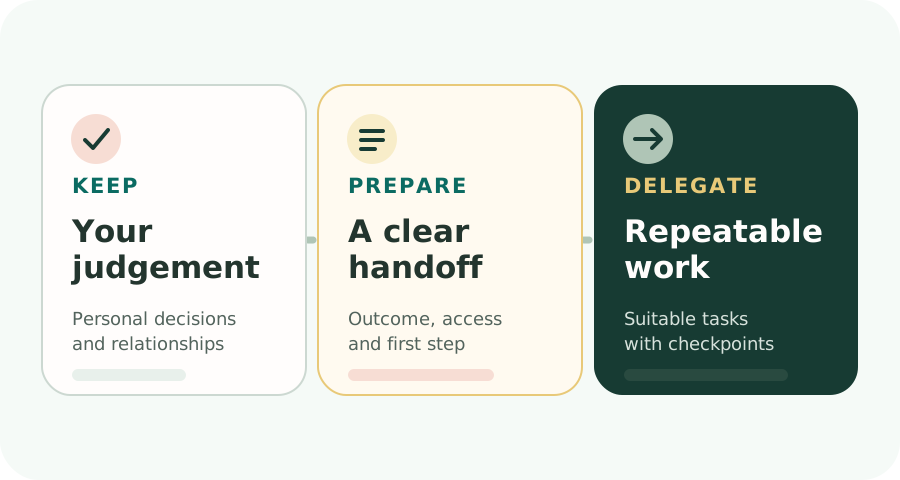
- Delegate work that repeats, interrupts focus, follows a process or needs reliable follow-through.
- Keep work that requires your personal authority, sensitive judgement or an unavailable context.
- Define the outcome and boundaries before explaining every tiny step.
- Begin with one task, review what worked and improve the handoff gradually.
Four signs a task may be ready to delegate
There is no universal list of tasks that every business owner should hand over. The right choice depends on your role, your current workload and the way your business operates. Still, four signals can help you identify strong candidates.
1. The task repeats
Recurring work is often easier to explain, measure and improve. It may happen every day, every week or each time a client reaches a certain stage.
Examples include:
- Formatting and scheduling approved content
- Updating a customer or project tracker
- Organizing inbox labels and flagging messages for your reply
- Preparing recurring meeting notes or reports
- Checking website pages for outdated information
A repeated task also creates an opportunity to build a simple checklist. Once the process is clear, you do not have to recreate the instructions each time.
2. The task interrupts more valuable work
Some tasks are not difficult, but they repeatedly break your concentration. A ten-minute interruption can occupy much more than ten minutes when it pulls you away from planning, creative work or client delivery.
Look for work that arrives in small bursts: downloading files, renaming documents, copying information between tools, answering routine questions or arranging times. Grouping these actions and handing them over can protect longer periods of focus.
3. The task follows a clear rule
If you regularly think, “When this happens, I always do that,” you may already have the beginning of a delegable process.
For example:
- When a new enquiry arrives, add it to the tracker and prepare a draft acknowledgement.
- When an article is approved, format it, add the supplied image and schedule it.
- When a meeting is confirmed, create the agenda document and add the link to the calendar entry.
The assistant does not need to make the final business decision. They can prepare the information or complete the defined steps so your decision becomes quicker and easier.
4. The task has been waiting because it is never the top priority
Important maintenance work can remain unfinished for months because urgent client work always comes first. Common examples include refreshing website copy, organizing shared folders, creating reusable document templates or cleaning a contact list.
These projects can be excellent focused assignments when the outcome is specific. “Fix our digital clutter” is broad. “Organize the client folder into the agreed five sections and provide a list of duplicates for review” is clear.
What should stay with you for now?
Good delegation includes knowing what not to delegate. Keep a task with you, or pause the handoff, when it depends on authority or context that cannot yet be transferred responsibly.
That may include:
- Final decisions about hiring, pricing, contracts or business direction
- Legal, medical, financial or other regulated professional judgement
- Access to sensitive systems before a secure method and genuine need have been agreed
- Personal client conversations where your relationship is central
- A process that changes every time and has no stable outcome yet
An assistant can still help around these responsibilities. They might organize non-sensitive information, prepare questions, format a document or track agreed next actions. You keep the decision; they reduce the surrounding friction.
Make a calm delegation list in 15 minutes
You do not need to document your entire operation. Open a blank page and create three headings:
- Repeats: work you do on a predictable cycle
- Interrupts: small tasks that pull you away from focused work
- Waits: useful tasks that keep falling to the bottom of the list
Add items without editing yourself. Then place a small mark beside any task that:
- Has a visible finish point
- Can be completed without your constant presence
- Uses information you can provide safely
- Would create a noticeable improvement if completed
Choose one marked item. Not five. A small first assignment gives you a safer way to learn what kind of instructions, updates and review points work for you.
Use the outcome-first handoff
Long instructions are not always clear instructions. Start with the result, then add only the context needed to reach it.
A useful handoff answers six questions:
1. What should be true when the task is finished?
Describe the completed state. For example: “The five approved blog posts are formatted in WordPress, saved as drafts and ready for my final review.”
2. What materials are available?
List the documents, links, approved copy or brand assets required. Share access only through an agreed secure method, and do not send passwords or payment details through a public enquiry form.
3. What is included?
Name the actions that belong in the task. If formatting, image placement and internal links are included, say so.
4. What is not included?
Boundaries prevent assumptions. You might note that rewriting, publishing or replying to comments requires separate approval.
5. When is it needed?
Give a real deadline and mention any dependency. “By Thursday at 3 p.m., so I can review before Friday” is more useful than “as soon as possible.”
6. When should the assistant ask rather than decide?
Identify the points that require your approval. This may include selecting a final image, changing public copy, purchasing a tool or contacting a client.
Three practical delegation examples
Example 1: A general administration task
Vague request: “Please sort out my inbox.”
Clearer request: “Review messages received this week. Apply the five existing labels, archive newsletters, flag anything that needs my decision and place routine scheduling requests in a draft reply. Do not send messages. Give me a short summary by Friday morning.”
The clearer version protects decision-making while removing the sorting work.
Example 2: A website-content task
Vague request: “Update the website.”
Clearer request: “Replace the approved service descriptions on the three listed pages, keep the current layout, check the pages on desktop and mobile, and send preview links before anything is published.”
The outcome, page list, design boundary and approval point are all visible.
Example 3: A mixed technical and general task
Vague request: “Help with the webinar.”
Clearer request: “Format the supplied registration copy on the landing page, test the form, organize attendee names in the tracker and draft the reminder message. I will approve the page and send the message.”
This request crosses technical and general support, but it still forms one coherent outcome.
A simple first-week approach
Your first delegation is a test of the process, not a test of whether you are “good at delegating.” Keep the cycle short:
- Choose: Select one bounded task with a useful finish point.
- Clarify: Agree on the outcome, inputs, boundaries and timing.
- Begin: Provide the required materials through the appropriate channel.
- Check: Use one planned update point instead of repeatedly checking in.
- Review: Confirm what is complete and note what would make the next handoff easier.
Afterward, save any useful instructions as a short checklist. If the task repeats, the next handoff should take less effort.
Common delegation mistakes—and calmer alternatives
Waiting until everything is documented. Start with the outcome and create the checklist while the task is completed.
Handing over an urgent, high-risk task first. Choose something meaningful but recoverable, with enough time for a question or review.
Explaining every movement but not the goal. Lead with what “done” looks like, then include important steps and boundaries.
Giving access before the scope is clear. Confirm what is needed and use a secure handoff method after the work is agreed.
Adding new requests midway without discussing impact. Keep extra ideas in a follow-up list and agree whether they change the scope or timing.
The right first task is the one that creates clarity
Delegation works best when it gives both people a visible next step. You do not have to surrender control, build a complicated operations manual or choose between doing everything yourself and outsourcing everything.
Start with one task that repeats, interrupts or waits. Define the useful result. Keep the decisions that require you. Then use what you learn to make the next handoff even clearer.
If you would like help identifying whether a task fits technical support, general assistance or a practical mix of both, send HelloTiva a short written enquiry. You can describe the outcome in your own words, and the next step can be shaped from there.