
The phrase “virtual assistant” covers a wide range of work. One person may need help organizing client follow-ups; another may need website updates and form testing. A third may need both as part of the same project.
That variety can make choosing support feel harder than it needs to be. You do not have to identify the perfect job title before you ask for help. Begin with the result you want, then look at the kind of work required to reach it.
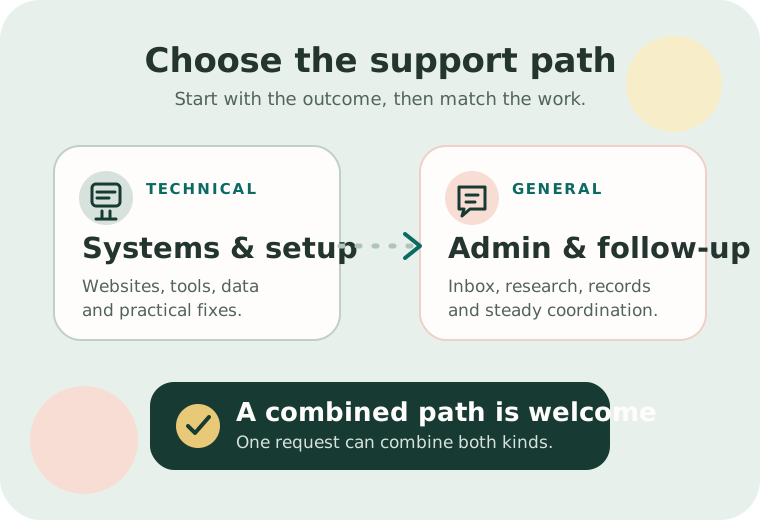
In simple terms, technical virtual-assistant support focuses on digital tools, website content and structured online tasks. General virtual-assistant support focuses on coordination, administration and routine business operations. A combined scope connects the two when one outcome moves across both areas.
Key takeaways
- Choose support based on the outcome and task requirements, not the most impressive title.
- Technical VA work usually involves websites, digital platforms, content setup, data or tool-based workflows.
- General VA work usually involves organization, communication preparation, scheduling, research and administrative follow-through.
- Many real projects need a clearly scoped combination of both.
- Confirm access, responsibilities, approval points and timing before work begins.
What is technical VA support?
Technical VA support helps with practical digital work that sits between everyday administration and specialist engineering. The exact boundary depends on the provider, so the task should always be reviewed for fit.
Typical technical support may include:
- Updating approved text and images on website pages
- Formatting and uploading blog articles
- Creating or adjusting simple forms
- Testing links, buttons and basic customer journeys
- Organizing digital content inside an online platform
- Preparing presentations and structured documents
- Researching and arranging information in spreadsheets
- Supporting routine tasks inside familiar business tools
The word “technical” does not mean every complex technology request belongs with a technical VA. Custom software engineering, advanced cybersecurity, regulated data handling or major infrastructure changes may require a dedicated specialist. A responsible support process makes that boundary clear instead of promising work that is outside the available capability.
A technical-support example
Imagine that your services have changed and three website pages are outdated. You already have the approved wording but keep postponing the update.
A technical VA scope might include:
- Replace the supplied copy on the named pages.
- Format headings and lists to match the existing design.
- Add the approved images and descriptive alt text.
- Check links and buttons.
- Review the pages on desktop, tablet and mobile.
- Send preview links for approval before publication.
The business owner still approves the public message. The assistant handles the careful implementation and checking around that decision.
What is general VA support?
General VA support helps keep routine work organized and moving. It is often a strong fit when the main challenge is follow-through, coordination or the number of small actions competing for attention.
Typical general support may include:
- Organizing inboxes using agreed labels and rules
- Preparing draft responses for review
- Coordinating calendars and scheduling requests
- Updating project, client or content trackers
- Conducting online research and summarizing findings
- Formatting documents and meeting notes
- Organizing folders and naming files consistently
- Tracking routine follow-ups and visible next actions
General assistance should still have boundaries. For example, an assistant may prepare a draft client response, but you may keep final approval. They may identify available meeting times, while you decide which relationship takes priority.
A general-support example
Suppose new enquiries arrive through different channels and follow-up is inconsistent. A general VA scope might include:
- Add each non-sensitive enquiry to an agreed tracker.
- Record the date, service interest and current status.
- Prepare the approved acknowledgement template as a draft.
- Flag questions that require the owner’s decision.
- Provide a twice-weekly summary of open next steps.
The value is not simply “doing admin.” It is creating a reliable view of what needs attention.
When a combined scope is the better fit
Business outcomes rarely stay inside neat labels. A useful project may involve a digital setup and the routine coordination that supports it.
Consider publishing a downloadable guide. The technical work could include formatting a landing page, setting up the supplied download and testing the form. The general work could include organizing enquiries, updating the campaign tracker and preparing approved follow-up messages.
Other combined examples include:
- Blog publishing: Format articles in WordPress, source approved imagery, check links and update the editorial calendar.
- Online event support: Update a registration page, test the form, organize attendee information and prepare reminder drafts.
- Client onboarding: Format welcome materials, organize shared folders, update a tracker and coordinate agreed appointments.
- Service launch: Update website content, prepare presentation documents, organize questions and track launch tasks.
A combined scope should not become an unlimited task list. It still needs one outcome, an agreed set of deliverables and clear points where the work pauses for approval.
A side-by-side comparison
| If the work mainly involves… | Likely starting path | Example outcome |
|---|---|---|
| Website pages, digital content, forms or platform updates | Technical support | Approved service copy is updated and checked across devices |
| Schedules, inbox organization, follow-ups or routine records | General support | Open client actions are organized and visible in one tracker |
| Both a digital setup and ongoing coordination | Combined support | A registration page is ready and attendee follow-up is organized |
| Specialist coding, regulated advice or high-risk systems | Specialist review | The request is referred to an appropriately qualified professional |
This table is a starting point, not a rigid rule. The safest way to classify the work is to describe what needs to change and what systems or people are involved.
Five questions to choose the right support path
1. What should be different when the work is finished?
Use a completed-state sentence: “The article is formatted, checked and saved as a draft,” or “Every current enquiry has a visible owner and next action.”
2. Where does the work happen?
List the relevant website, document, inbox, calendar, spreadsheet or project tool. The more the task depends on platform setup and digital implementation, the more likely technical support is part of the scope.
3. Does the task primarily need implementation or coordination?
Implementation often points toward technical support. Coordination often points toward general support. If one cannot succeed without the other, consider a combined scope.
4. Which decisions must remain with you?
Identify decisions about public messaging, pricing, client relationships, purchases or sensitive access. An assistant can prepare the work without taking authority you have not given.
5. Is specialist judgement required?
Virtual assistance is not a substitute for legal, medical, financial or other regulated professional advice. Complex engineering or security work may also need a relevant specialist. Naming this early protects the business and helps the practical support stay within an appropriate boundary.
What to include in your first request
You do not need to write a formal project brief. A short, useful enquiry can include:
- The result you want
- The task or bottleneck slowing you down
- The tools or pages involved
- What materials are already available
- Your preferred timing
- Any important boundaries
- Whether you prefer a written reply, clarification or a call request
Do not place passwords, card details or sensitive credentials in a public website form. Access needs can be discussed after the scope is reviewed and an appropriate handoff method is agreed.
How to avoid choosing by price or title alone
Two services can use the same label and offer very different work. Before comparing options, check what is actually included.
Ask:
- Are the deliverables written clearly?
- Is the number of pages, records, messages or hours defined where relevant?
- Who supplies the copy, images and access?
- What testing or review is included?
- When will you receive updates?
- What requires separate approval or an additional quote?
A smaller, well-defined scope is often more useful than a broad promise. It gives you a clear way to evaluate the result and decide what support to arrange next.
Choose the outcome first
You do not need to decide whether a task is “technical enough” before you reach out. If the desired result is clear, the work can usually be separated into practical parts.
Choose technical support when digital implementation is central. Choose general support when organization and follow-through are central. Choose a combined scope when both are necessary to complete one meaningful outcome. Keep specialist decisions with the appropriate professional, and make access and approval boundaries visible before work begins.
If you are still unsure which path fits, send HelloTiva a short written enquiry. Describe what needs to be updated, organized, completed or made easier, and the most suitable next step can be clarified with you.